 Castle Glenn
Theodore Roosevelt understood something that many politicians before and since have missed: that a nation’s character is not built in its capital buildings. It’s built in the landscape, in the daily work people do to survive and make something of their circumstances, in the accumulated habits and traditions that accumulate when a community has to rely on itself over a long period of time.
Iceland is one of the best examples of this principle anywhere in the world. Settled by Norse and Celtic peoples in the 9th century, the island sits in the North Atlantic at the edge of the Arctic, geologically volatile, largely treeless, and cut off from the European mainland in ways that forced the development of a culture entirely shaped by what the land and sea could provide. That culture is still legible in what Icelanders eat today. A food tour through Reykjavik is not just a culinary experience. It’s a compressed history of a people who built a functioning civilisation on one of the harshest inhabited islands on earth, and kept it going for over a thousand years.
Here are eight reasons that history is worth tasting.
1. Icelandic Food Is a Direct Record of How the Nation Survived
Every cuisine is a survival strategy made tradition. What distinguishes Icelandic food is how recent and legible that survival story remains. Iceland had no agriculture to speak of beyond sheep and cattle farming until well into the 20th century. The absence of forests meant no firewood for most of the population. The growing season was short. The sea was the main source of protein, and the wind and the cold were the primary means of preserving it.
The result is a food culture built almost entirely around fish, lamb, dairy, and preserved things: dried cod, smoked lamb, skyr (a strained dairy product closer to cheese than yoghurt), and the notorious hákarl, fermented Greenlandic shark buried and cured for months. These aren’t novelty foods or heritage theatre. They were the answers a practical people worked out to the problem of feeding themselves through winter at 65 degrees north latitude, and understanding that context changes what they mean.
2. The Sagas Are Written Into the Landscape and the Food Equally
The Icelandic sagas, the prose narratives composed in the 13th and 14th centuries documenting the settlement of Iceland and the early republic, are among the most detailed records of medieval Norse society anywhere in the world. They describe feasts, farming practices, fishing methods, and the social structures that formed around the management of food and resources in a scarce environment.
Reading the sagas alongside a knowledge of traditional Icelandic food gives you two lenses on the same society: the literary record and the material record. The lamb that appears at every Icelandic celebration today is the same animal that appears in the sagas as a marker of wealth and hospitality. The dried fish that Icelandic farmers packed for long journeys in the 10th century is the same product, differently packaged, that you find in Reykjavik markets today. Few other food cultures offer this kind of continuity between the historical text and the living plate.
3. Iceland’s Democratic Tradition Predates Almost Every Other Nation’s
For those who study presidential biography and the development of democratic governance, Iceland offers a useful counterpoint to the American tradition. The Althing, Iceland’s parliament, was established in 930 CE at Thingvellir, making it one of the oldest continuously functioning legislative assemblies in the world. It predates Magna Carta by nearly three centuries and the US Constitution by over 850 years.
The food culture that developed alongside this political tradition reflects the same egalitarian pragmatism. Icelandic cuisine has no aristocratic cooking tradition of the kind that shaped French or English food. There was no court, no landed nobility with access to imported luxuries, no tradition of elaborate presentation designed to signal social status. Everyone ate more or less what the land and sea produced, prepared in ways that were determined by necessity rather than fashion. That democratic relationship with food is still visible in Reykjavik’s restaurants and food markets today.
4. The New Icelandic Food Scene Is a Story of National Confidence
For most of the 20th century, Icelandic food was regarded by outsiders, and sometimes by Icelanders themselves, as primitive or limited. The country’s isolation, its dependence on a narrow range of ingredients, and its distance from European culinary trends left it outside the conversations that shaped modern Western gastronomy.
That changed starting in the 1990s and accelerating through the 2000s. A generation of Icelandic chefs trained abroad and came home to apply international technique to local ingredients, producing a cuisine that is now regarded as one of the most coherent and distinctive in Northern Europe. Reykjavik has more Michelin-starred restaurants per capita than most comparably sized cities in the world. The key move was not importing foreign ideas but using them to reframe what Iceland already had: the fish, the lamb, the dairy, the skyr, the volcanic geothermal cooking environment, and the very short supply chain between the sea and the kitchen. This is the same kind of confident self-reinvention that marks the strongest chapters in the biographies of great leaders.
5. A Food Tour Connects Geopolitics, Geography, and Gastronomy in the Same Walk
Iceland’s position at the intersection of the North Atlantic has made it strategically significant in ways that go well beyond its small population of around 380,000. The island’s neutrality in the Cold War, its NATO membership despite having no standing army, its management of one of the world’s most contested fishing territories, and its rapid economic rise and dramatic financial collapse in 2008 are all episodes in a national story shaped fundamentally by geography and resources.
Fish is at the centre of that story. The cod wars of the 1950s through 1970s, in which Iceland extended its fishing exclusion zone three times against British objections and eventually prevailed, are a significant episode in the history of international maritime law and small-nation sovereignty. The fish on the table in a Reykjavik restaurant has a geopolitical history behind it that most food doesn’t. Understanding that history while eating the fish is the kind of layered experience that students of political biography tend to find compelling. As our blog explores in the context of presidential diaries and decision-making, the most revealing documents are often the ones that show leaders engaging with the material realities of governance, and Icelandic food history is nothing if not material.
6. Guided Food Tours Provide the Historical Context That Makes Tasting Mean Something
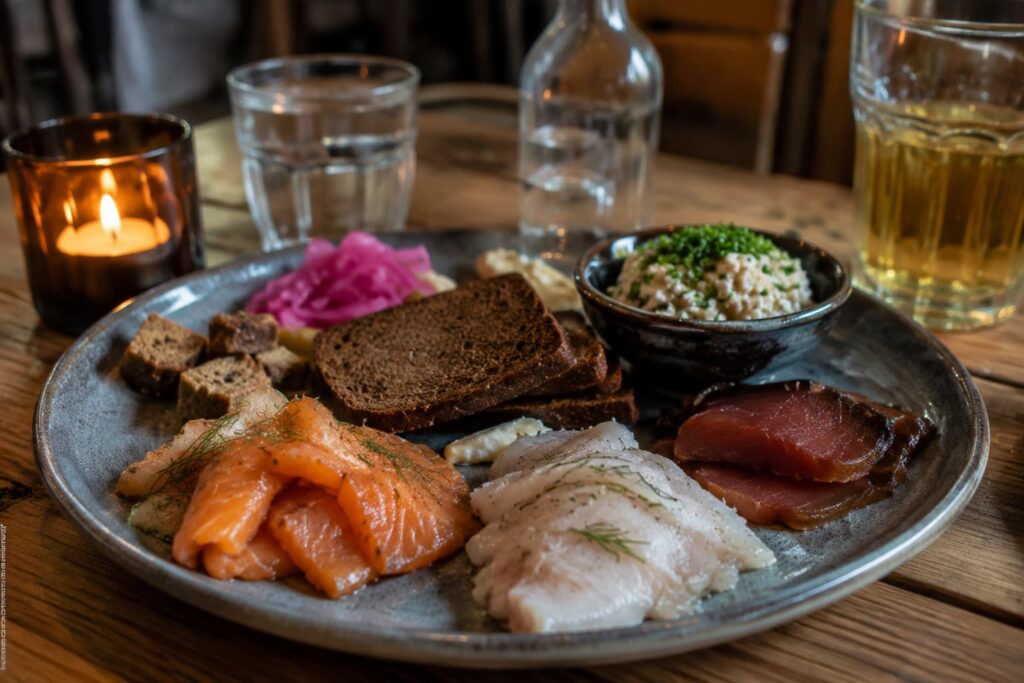
Reykjavik is a compact city, walkable and dense with food stops within a small area. The challenge for a visitor is not finding good food but understanding what they’re eating in relation to the culture and history that produced it. A skyr on its own is a pleasant dairy product. A skyr explained in the context of Viking-age dairy preservation, the absence of refrigeration for most of Icelandic history, and the role of dairy fat in sustaining people through winters with minimal caloric variety, is a different thing entirely.
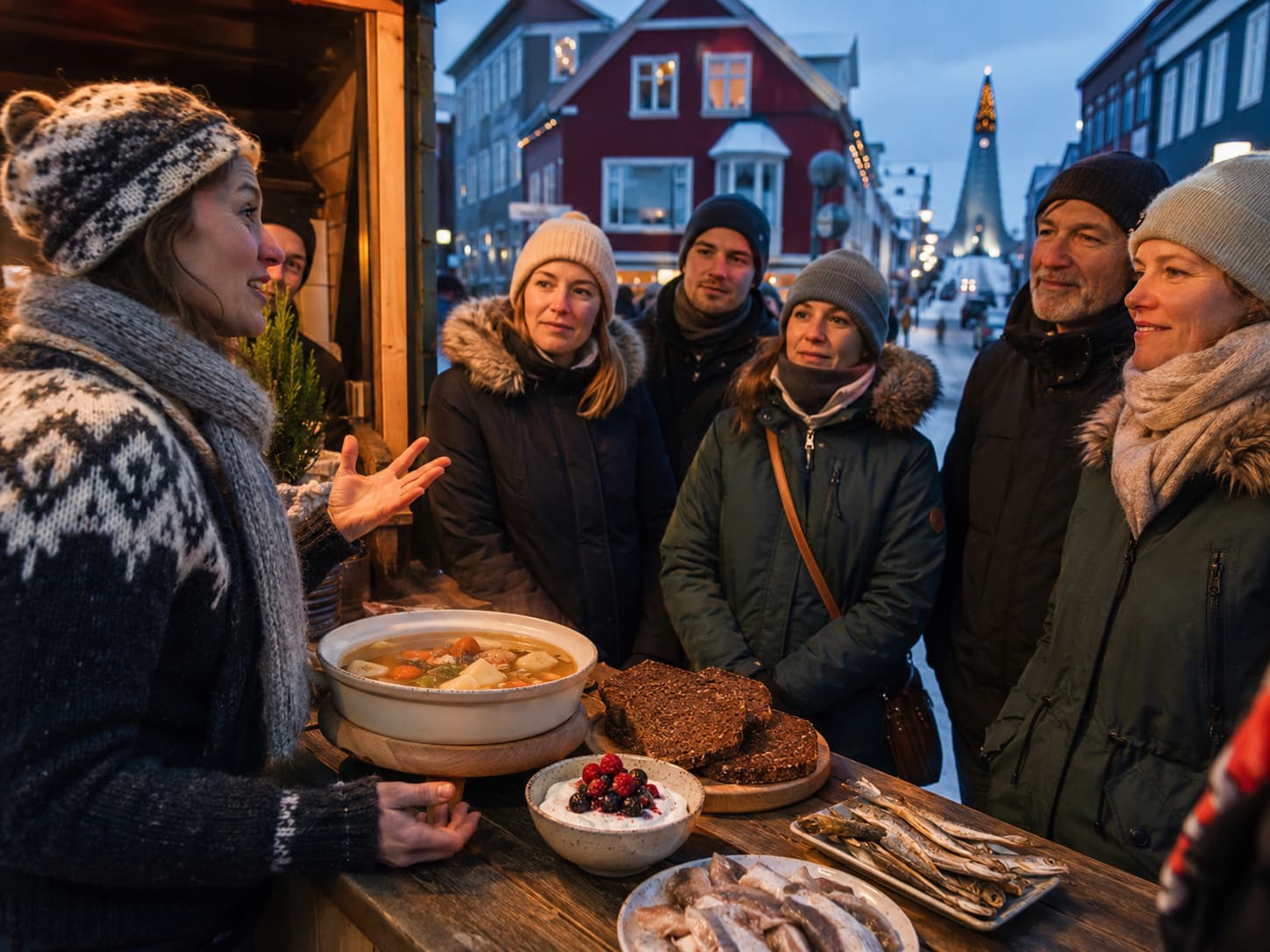
Operators like Reykjavik Food Tours build exactly this kind of contextual depth into their walks, moving through the city’s markets, restaurants, and food producers while connecting each stop to the historical and cultural story behind it. For visitors whose interest in Iceland is not only culinary but historical and political, this kind of guided approach produces a much richer picture of the country than independent restaurant visits alone.
7. Theodore Roosevelt Would Have Recognised Iceland’s Approach to Natural Resources
Roosevelt’s conservation legacy, the national parks, the forest reserves, the establishment of the US Geological Survey as a serious instrument of resource management, grew from a conviction that a nation’s relationship with its natural environment determines its long-term vitality. Waste the land and you waste the future. Manage it carefully and you build something that lasts.
Iceland has operated on a version of this principle through necessity for over a thousand years. The management of fish stocks, the careful use of geothermal energy, the preservation of the highland interior from overgrazing, and more recently the attempt to balance a rapidly growing tourism industry against the fragility of the volcanic landscape: these are all expressions of the same fundamental insight Roosevelt spent his presidency trying to institutionalise. Iceland arrived at it through survival rather than ideology, but the outcome looks similar. A food tour that takes you to a geothermally heated greenhouse growing tomatoes in winter, or a fish market supplied by boats that operate under strict catch quotas, is a tour through applied conservation thinking.
8. Reykjavik in Winter Is Worth the Cold
Most visitors to Iceland come in summer, for the midnight sun and the accessible hiking. The winter experience is different and, for those interested in understanding the country rather than just its landscape, more instructive. Reykjavik in January or February is a city lit by candlelight and geothermal warmth, dealing with a few hours of grey daylight and making the most of it. The food culture in winter is at its most concentrated: the lamb soup that has sustained Icelanders through centuries of dark months, the fish stew, the skyr with preserved berries, the slow-cooked preparations that work with the cold rather than against it.
Roosevelt wrote extensively about what the frontier winter did to the character of those who survived it: the discipline, the clarity, the stripping away of everything unnecessary. He documented this in his Dakota ranch diaries with the same attention to physical and environmental detail that he brought to his presidential work. The Icelandic winter operates on the same character-building logic, and the food that emerged from centuries of surviving it carries that history in ways that summer tourism rarely surfaces. Our piece on presidential health and how adversity shaped leadership touches on exactly this relationship between physical hardship and the formation of character. Iceland’s food culture is a thousand-year experiment in the same dynamic.
A Final Thought
Roosevelt believed that the most honest account of any leader’s life was found not in their formal speeches but in the decisions they made when circumstances forced their hand. The same principle applies to cultures. A cuisine built under conditions of genuine scarcity tells you more about a people’s ingenuity, pragmatism, and values than any formal cultural institution does.
Iceland’s food is that kind of honest account. It records a thousand years of decisions made under pressure, on an island at the edge of the inhabitable world, by people who had to make something from what they had. Eating it in Reykjavik, with a guide who knows the story behind each dish, is one of the more direct ways available to a traveler of understanding what a nation actually is, underneath the flag and the parliament building and the official history.
That’s worth a trip to the North Atlantic. Bring a proper coat.