 Castle Glenn
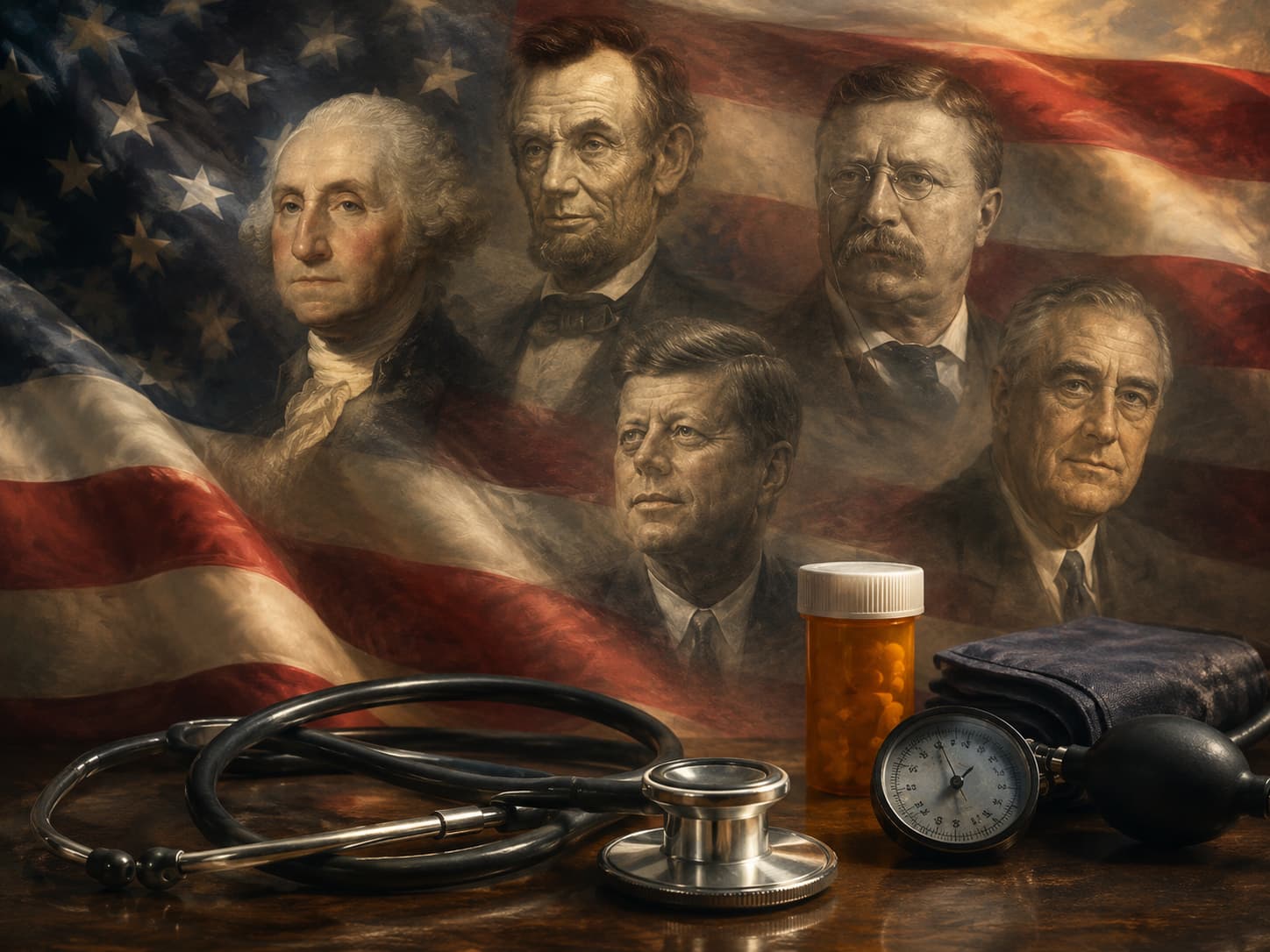
The health of a president is never only a private matter. In the United States, the president is head of state, head of government, commander in chief, party leader, public symbol, and crisis manager. When a president becomes seriously ill, exhausted, disabled, or physically limited, the effects can reach far beyond one person’s body. Health can shape work habits, communication style, decision-making, public image, and even the balance of power inside the White House.
Presidential biographies often focus on elections, speeches, wars, reforms, and scandals. Yet illness is also part of political history. Some presidents governed through chronic pain. Some hid serious conditions from the public. Some relied heavily on advisers or family members during periods of weakness. Others turned physical hardship into part of their political identity. The question is not simply whether a president was healthy or ill. The deeper question is how health affected leadership.
American presidents have often felt pressure to appear energetic, disciplined, and physically capable. Voters may accept age, injury, or past illness, but they usually expect the president to look in control. This creates a tension between medical reality and political performance. A president may be ill, tired, or limited, while the public image remains carefully managed.
This pressure is not new. In earlier periods, the public received far less medical information than it does today. Newspapers might report visible weakness, but official statements could be vague. Doctors often protected presidential privacy. Families and advisers sometimes helped control what the public knew. As a result, presidential health could become part of a larger story about secrecy, trust, and power.
Health affects leadership first through daily routine. A president who sleeps poorly, suffers pain, has limited mobility, or recovers from serious illness may work differently from a president with strong physical stamina. Meetings may be shorter. Advisers may gain more influence. Written briefings may become more important. Travel may be reduced. Public appearances may be carefully scheduled.
These changes do not automatically make a president weak. Some leaders adapt effectively. They delegate better, focus on key decisions, and use structured routines. But illness can narrow the president’s direct contact with people and events. It can also increase dependence on the inner circle. When access to the president becomes limited, the people who control that access may become more powerful.
Woodrow Wilson’s stroke in 1919 is one of the most important examples of presidential illness affecting governance. After the stroke, Wilson was severely weakened. The public did not fully understand the seriousness of his condition. His wife, Edith Wilson, and close advisers played major roles in managing access to him.
The Wilson case raised difficult questions that later generations could not ignore. What happens when a president is alive but unable to fully perform the duties of the office? Who decides whether the president is incapacitated? How much should the public know? Before the modern rules of presidential disability were clarified, the system depended heavily on informal judgment, loyalty, and secrecy.
Wilson’s illness did not only affect his body. It affected the functioning of the presidency. It showed that presidential health could become a constitutional problem.
Franklin D. Roosevelt offers a different case. He lived with paralysis after polio, yet became one of the most dominant presidents in American history. His disability shaped his public image in complex ways. Roosevelt and his team carefully managed how he was photographed and presented. They often avoided showing the full extent of his physical limitations.
At the same time, Roosevelt’s experience with illness and disability may have strengthened parts of his leadership. He developed discipline, patience, emotional resilience, and an ability to project confidence. During the Great Depression and World War II, his voice, optimism, and public confidence became central to his political power.
Roosevelt’s example shows that physical limitation does not prevent strong leadership. But it also shows how carefully presidential health can be managed as part of public image.
Not every health issue is dramatic enough to become a constitutional crisis. Some conditions influence leadership more quietly. Chronic pain, recurring illness, digestive problems, heart trouble, exhaustion, or medication can shape temperament. A president under physical strain may become impatient, cautious, isolated, or unusually dependent on routine.
John F. Kennedy is often remembered as young, energetic, and charismatic. Yet he lived with serious health problems, including back pain and other medical conditions that were not fully visible to the public. His case shows how presidential image can differ sharply from medical reality. A public image of youth and strength can exist beside private pain and heavy treatment.
This gap matters because presidential leadership is partly emotional performance. The president must appear calm during crises, confident during uncertainty, and available during national stress. Poor health can make that performance harder, even when the public does not see the struggle.
Health questions become especially intense when presidents are older. Age does not automatically mean poor leadership. Older presidents may bring experience, judgment, patience, and historical memory. But age does raise questions about stamina, recovery, cognitive sharpness, and the physical demands of the office.
Modern presidents face constant travel, media attention, security briefings, international crises, campaign pressure, and public scrutiny. The job is physically and mentally demanding. Even a healthy president can be worn down by the schedule. For older presidents, the management of time, rest, medical care, and delegation becomes even more important.
The public discussion of age can be unfair or overly political, but it cannot be dismissed entirely. In a system where one person holds enormous executive power, presidential capacity matters.
One of the central issues in presidential health is trust. The public does not need every private medical detail. Presidents are human beings with a right to some privacy. But the public does need confidence that the president can perform the duties of the office.
When health information is hidden or minimized, later revelations can damage trust. Citizens may wonder who was making decisions, what advisers knew, and whether political interests mattered more than transparency. The problem is not only the illness itself. It is the possibility that illness changes power behind the scenes while the public is told very little.
Health should not be used to reduce a president’s life to weakness. Many presidents governed effectively while facing illness, injury, age, grief, or exhaustion. But health should also not be ignored. It belongs inside presidential biography because it helps explain choices, routines, relationships, and public image.
A president’s body is not separate from the office. It carries the schedule, absorbs pressure, appears before the public, and responds to crisis. When the body is strained, the presidency adapts. Sometimes that adaptation is strong and disciplined. Sometimes it becomes secretive and unstable.
The history of presidential health reminds us that leadership is never only institutional. It is also human. Behind the speeches, laws, wars, and reforms stands a person with limits. Understanding those limits does not make presidential history smaller. It makes it more honest.