 Castle Glenn
The office of vice president has always carried a strange place in American political life. It is one step away from the presidency, but it has often been treated as a limited, quiet, and sometimes frustrating position. The vice president is close to power, yet not always central to it. The role can offer national visibility, experience inside the executive branch, and direct knowledge of presidential decision-making. At the same time, it can leave a politician with little independent authority.
For future presidents, the vice presidency has worked in different ways. For some, it became a direct bridge to the White House after the death or resignation of a president. For others, it provided a national platform before an election campaign. In some cases, it helped prepare a leader for crisis. In other cases, it showed the limits of being near the presidency without actually holding it.
A Constitutional Role With Limited Power
The U.S. Constitution gives the vice president two main functions. The vice president presides over the Senate and stands next in line if the president dies, resigns, or is removed. These duties sound important, but for much of American history, they gave the vice president little daily influence. Presiding over the Senate was often procedural. Waiting for succession could feel passive.
This created a problem. The vice president was nationally elected, but often had no clear executive portfolio. A future president serving as vice president could observe power, but not always exercise it. This made the role dependent on the president’s trust, political needs, and personal style.
Succession and Sudden Responsibility
The most dramatic path from vice president to president has been succession. John Tyler became president after the death of William Henry Harrison in 1841. His rise was historically important because it established the expectation that the vice president would become the full president, not merely an acting officer. That precedent shaped every later case of presidential succession.
Other vice presidents entered the White House through national crisis. Millard Fillmore followed Zachary Taylor. Andrew Johnson followed Abraham Lincoln after the assassination in 1865. Chester A. Arthur followed James Garfield. Theodore Roosevelt followed William McKinley. Calvin Coolidge followed Warren G. Harding. Harry Truman followed Franklin D. Roosevelt. Lyndon B. Johnson followed John F. Kennedy. Gerald Ford followed Richard Nixon after resignation.
These examples show the central seriousness of the vice presidency. A role that may appear secondary can become the most powerful office in the country in a single day. The vice president must be ready for responsibility even when the position gives limited practice.
Theodore Roosevelt and the Unexpected Path
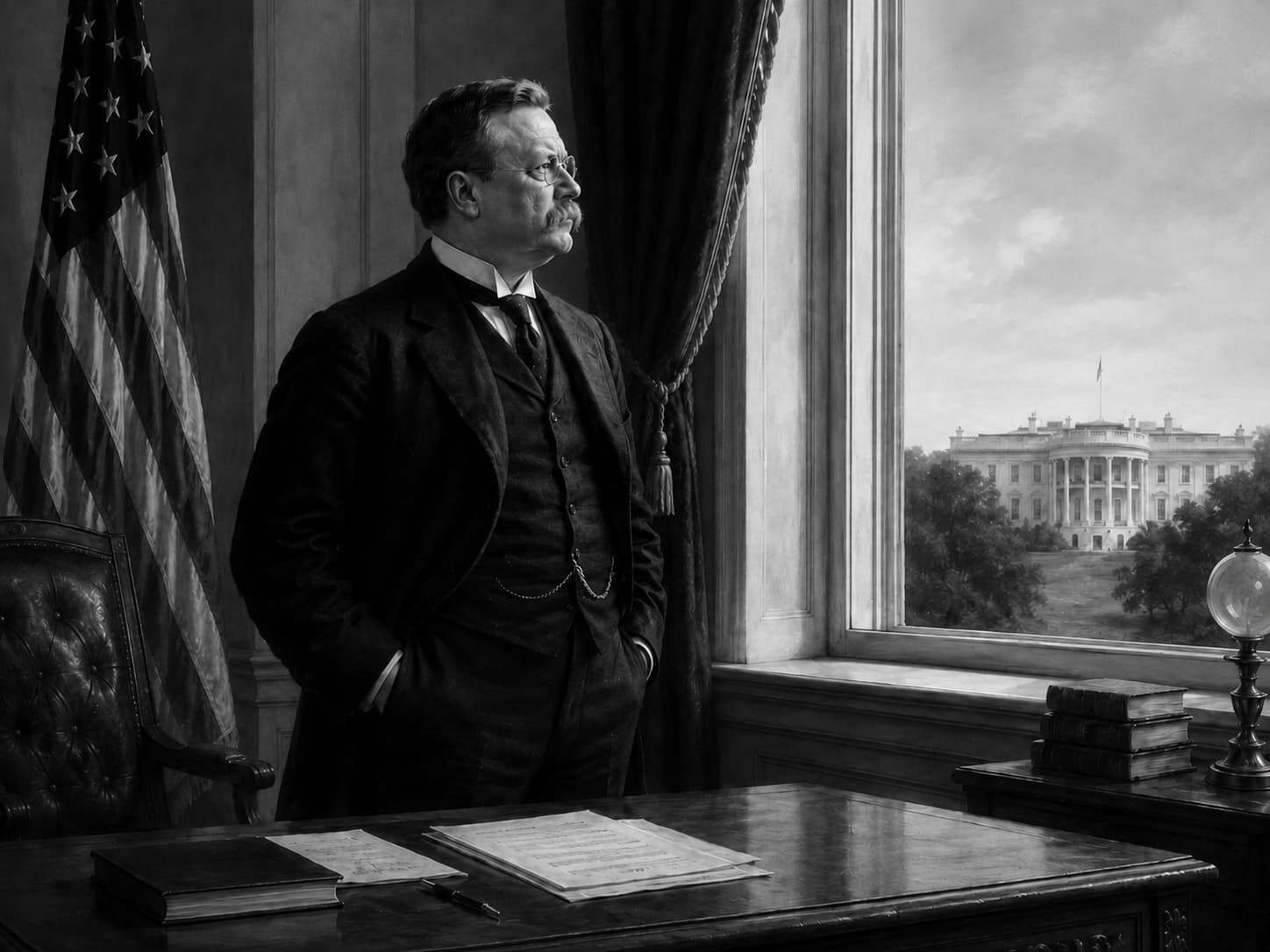
Theodore Roosevelt is one of the clearest examples of the vice presidency as an unexpected gateway. He became vice president in 1901 after a career as governor of New York, reformer, soldier, writer, and national public figure. Some political leaders saw the vice presidency as a way to contain his energy and remove him from state politics.
That plan failed when President McKinley was assassinated. Roosevelt became president at the age of 42. His time as vice president was brief, but his earlier career gave him the confidence and public identity needed to act quickly. In his case, the vice presidency did not train him for long. It placed him one step away from a role he was already ambitious enough to define on his own.
Roosevelt’s example shows an important point. The vice presidency can be less important as a training office than as a constitutional position. What matters is not only what the vice president does while holding the office, but what experience and political character he brings into it.
Learning the Machinery of Government
For later vice presidents, the role became more active. As the federal government expanded, presidents increasingly used vice presidents as advisers, envoys, campaign partners, and representatives of the administration. This gave future presidents more direct preparation.
Richard Nixon served as vice president under Dwight D. Eisenhower. He gained national and international experience, traveled widely, and became one of the most visible vice presidents of the twentieth century. Although he lost the 1960 presidential election, his vice presidency helped build the national profile that later supported his 1968 comeback.
George H. W. Bush also benefited from the role. As vice president under Ronald Reagan, he spent eight years inside a popular administration. He attended meetings, represented continuity, and built trust with Republican voters. When he ran for president in 1988, he could present himself as experienced and ready.
Joe Biden’s vice presidency under Barack Obama gave him similar executive familiarity. He had long experience in the Senate before becoming vice president, but the office connected him directly to White House decision-making, foreign policy debates, crisis management, and executive administration. When he later ran for president, that experience became part of his political argument.
Visibility Without Full Control
The vice presidency can also be difficult because visibility does not equal control. A vice president may be blamed for administration failures without having had the final authority to prevent them. He may defend policies he did not design. He may have to remain loyal to the president while preserving his own future identity.
This is especially important for vice presidents who hope to become president through election rather than succession. They must show loyalty, but they also need a personal political brand. If they seem too independent, they can damage the administration. If they seem too passive, voters may doubt their leadership.
The role therefore requires balance. A vice president must be visible enough to appear prepared, but not so visible that he competes with the president.
The Vice President as Political Partner
In modern campaigns, a vice-presidential nominee is often chosen to balance the ticket. The choice may add regional appeal, ideological balance, legislative experience, foreign policy knowledge, generational contrast, or credibility with a key voter group. This means the vice president may enter office with a political role before any governing role begins.
Once in office, the vice president can become a bridge between the president and Congress, the party, state leaders, foreign governments, or specific policy groups. This can make the office more meaningful. It can also give a future president valuable relationships.
But the quality of that preparation depends on access. A vice president who is included in major decisions learns the pressures of the presidency. A vice president kept at a distance learns much less.
A Test of Readiness
The vice presidency is not a guarantee of presidential success. Some vice presidents became strong presidents. Others struggled. Some were elected president later. Others never reached the office. The role itself does not create greatness. It tests preparation, patience, judgment, loyalty, and ambition.
Its value lies in proximity. The vice president sees how the presidency works from close range. He sees how advisers argue, how crises arrive, how public messages are shaped, and how decisions carry consequences. Even when the vice president lacks final authority, he gains exposure to the rhythms of national leadership.
In U.S. history, the vice presidency has been both a waiting room and a launchpad. It has been ignored, underestimated, and reshaped. For future presidents, it has offered a rare view of power before the full burden of power arrives. The role may be limited on ordinary days, but history has shown that it can become decisive without warning.