 Castle Glenn
Presidential decisions often reach the public in their final form. A law is signed. A speech is delivered. A military order is issued. A cabinet appointment is announced. From the outside, these actions can look firm, polished, and inevitable. Yet the real story behind a decision is usually more complicated. Presidents hesitate, consult, react emotionally, change their minds, test arguments, and respond to pressure from family, advisers, opponents, newspapers, and events. Diaries and letters help historians see that hidden process.
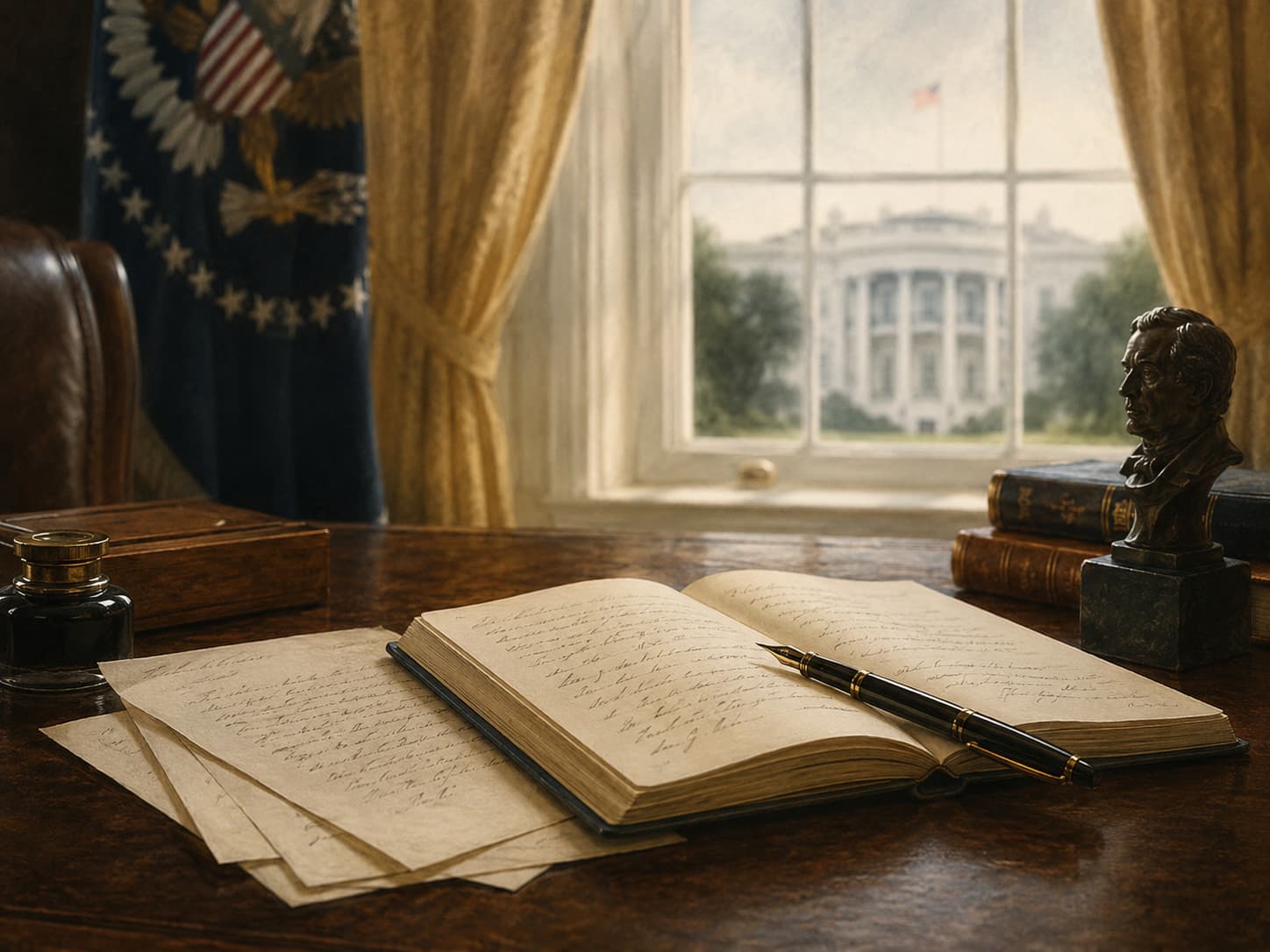
Official records show what a president did. Private writings often show how a president thought. This is why diaries, letters, personal notes, and private correspondence are so valuable for understanding decisions made in the White House. They do not replace laws, speeches, cabinet records, or public documents. Instead, they add another layer. They reveal mood, doubt, personal conviction, political calculation, and the human side of leadership.
The Private Side of Public Power
The presidency is a public office, but it is held by a private person. Every president brings personal habits, fears, loyalties, ambitions, friendships, memories, and moral beliefs into the job. Public speeches rarely show all of that. They are written for voters, Congress, the press, foreign governments, and history. Letters and diaries can be less controlled. They may show frustration, confidence, grief, anger, or uncertainty that never appears in official language.
A letter to a close friend may explain why a president distrusted a political rival. A diary entry may show how a president reacted after a difficult meeting. A note to a family member may reveal the emotional cost of a public decision. These sources help historians understand that leadership is not only strategy. It is also temperament.
Decisions Before They Became History
One reason private documents matter is that they often capture decisions before they became fixed. Public history usually focuses on outcomes. Private papers can show the process. A president may write about competing options, the advice of cabinet members, pressure from party leaders, or fear of public reaction. This makes diaries and letters especially useful when studying controversial decisions.
A decision that later appears confident may have begun in uncertainty. A policy that looks inevitable in a textbook may have been one of several possible choices. Private writings remind readers that history was not predetermined. Presidents made decisions with incomplete information, limited time, and imperfect advice. This does not excuse mistakes, but it helps explain them.
Letters as Political Instruments
Presidential letters are not always purely private. Many letters were written with a purpose. Some were meant to persuade. Some were meant to reassure allies. Some were designed to leave a record. A president might write to a senator, a governor, a military commander, a diplomat, or a reformer in order to shape events outside the formal machinery of government.
This makes letters useful but complicated. A letter can be honest, strategic, emotional, or carefully staged. Historians must ask who received it, why it was written, and what the president hoped to achieve. A letter to a loyal friend may sound different from a letter to a critic. A letter written during a crisis may be more revealing than one written after a decision has already succeeded.
Diaries and the Problem of Honesty
Diaries often seem more personal than letters because they may not have been written for immediate readers. They can reveal thoughts that a president would never say publicly. Yet diaries also require caution. Some people write diaries to understand themselves. Others write them with future readers in mind. A president may use a diary to justify actions, record grievances, or shape a later reputation.
Even so, diaries can be powerful historical sources. They may show what events seemed important at the time. They may reveal how a president ranked problems. They may capture fatigue, pressure, and private reactions to public criticism. A short diary entry can sometimes explain the emotional atmosphere of a decision better than a long official report.
Family Correspondence and Emotional Context
Family letters can be especially revealing. Presidents often wrote differently to spouses, children, siblings, or close relatives than they did to politicians. These letters may show anxiety, loneliness, health concerns, personal loss, or the desire to be understood. They can also show how family members influenced a president’s thinking.
This matters because presidents do not make decisions as machines. A leader facing war, economic crisis, political scandal, or social unrest may also be dealing with family illness, exhaustion, grief, or fear for the future. Personal context does not determine policy by itself, but it can shape judgment, patience, risk tolerance, and emotional resilience.
Understanding Motives Without Guessing
One danger in writing presidential biography is guessing too much about motives. It is easy to say that a president acted from ambition, fear, patriotism, vanity, loyalty, or moral conviction. Diaries and letters do not remove this problem entirely, but they give historians stronger evidence. They allow scholars to connect public action with private explanation.
For example, if a president publicly defended a reform and privately wrote about the same reform as a moral necessity, that matters. If a president publicly praised an ally but privately expressed deep mistrust, that also matters. Private documents help separate public performance from private belief, although the two are often connected.
The Limits of Private Sources
Diaries and letters are valuable, but they are not perfect. They can be incomplete, selective, damaged, edited, or missing. Some presidents wrote more than others. Some destroyed documents. Some families protected reputations. Some letters survived by accident. This means historians must avoid treating private papers as the whole truth.
A diary entry shows one moment. A letter shows one relationship. A personal note may reveal emotion but not full policy reasoning. Good historical analysis compares private writings with public records, newspapers, cabinet discussions, congressional debates, memoirs, and the wider political context. The strongest conclusions come when several types of evidence point in the same direction.
Why These Sources Still Matter
In the modern world, presidential communication has become faster and more public. Speeches, interviews, television appearances, social media posts, and press briefings create a constant record. Yet private writings still matter because public communication is often managed. The more polished the presidency becomes, the more important private sources are for understanding what happened behind the performance.
Presidential diaries and letters make biography deeper. They show presidents as decision-makers, but also as people under pressure. They reveal uncertainty behind confidence, calculation behind rhetoric, and emotion behind public duty. They help historians explain not only what happened in the White House, but why a president believed one choice was better than another.
A president’s final decision may belong to public history. The path toward that decision often lives in private papers. That is why diaries and letters remain windows into the White House. They bring readers closer to the moment when history was still unfinished, when the president was not yet a figure in a textbook, but a person choosing what to do next.